


Acetic acid
‹
›
‹
›
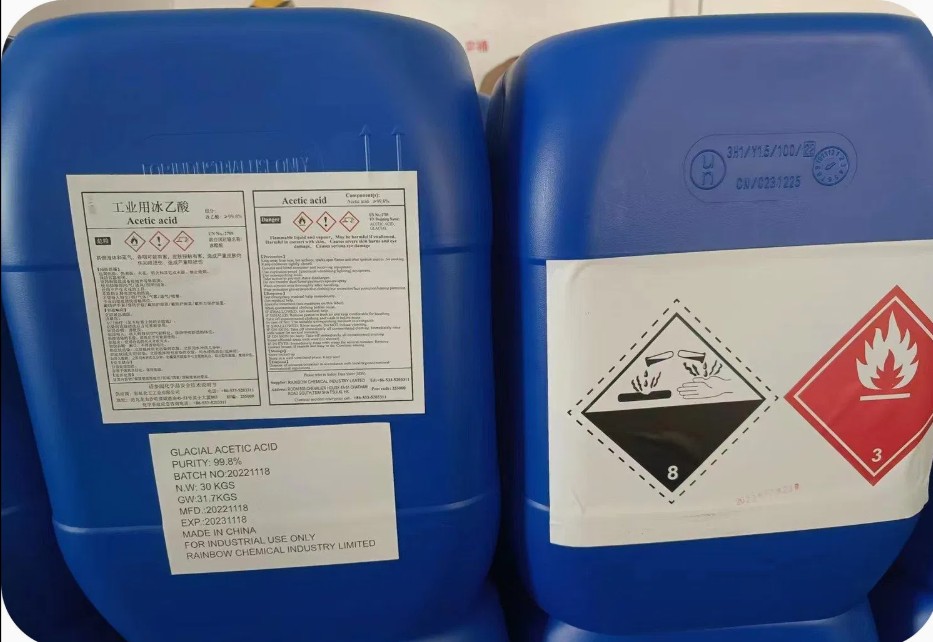
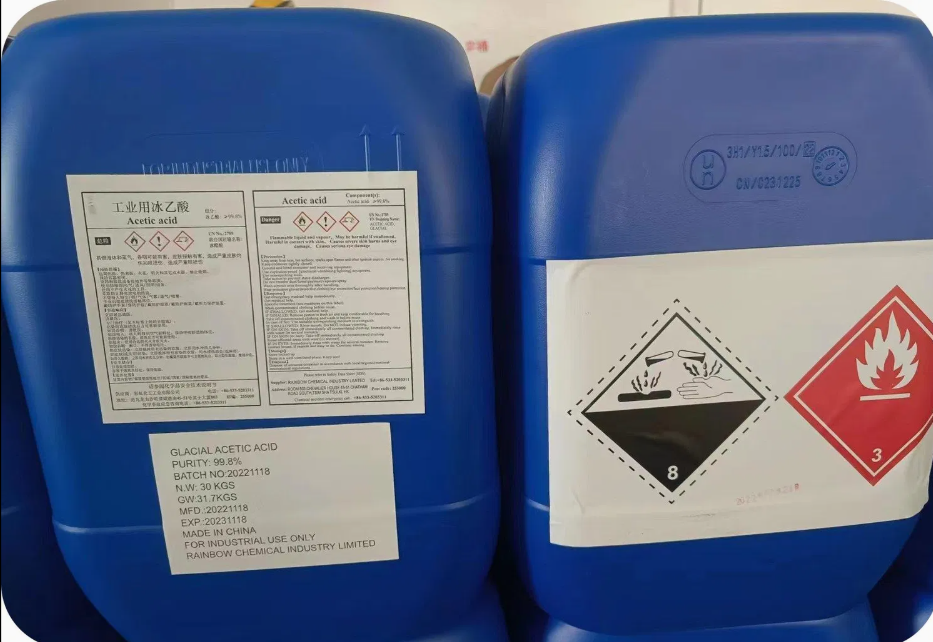
Acetic acid
Alternate Names:Glacial acetic acid
Application:Acetic acid is widely used in research and industrial uses
CAS Number:64-19-7
Purity:≥99%
Molecular Weight:60.05
Molecular Formula:C2H4O2
Supplemental Information:This is classified as a Dangerous Good for transport and may be subject to additional shipping charges.
Application:Acetic acid is widely used in research and industrial uses
CAS Number:64-19-7
Purity:≥99%
Molecular Weight:60.05
Molecular Formula:C2H4O2
Supplemental Information:This is classified as a Dangerous Good for transport and may be subject to additional shipping charges.
Contact Now
Share:
Product Description
Formulation :
approximately 17.4 M (calculated from density)
Physical State :
Liquid
Solubility :
Soluble in water, ethanol, ether, glycerol, most organic solvents, and carbon tetrachloride. Insoluble in carbon disulfide.
pH :
~2.5
Storage :
Store at room temperature
Melting Point :
16.6° C
Boiling Point :
118.1° C
Density :
1.05 g/mL at 25° C (lit.)
Refractive Index :
n20D 1.37 (lit.)
pK Values :
pKa: 4.75 at 25° C
Acetic acid (CAS 64-19-7) References
Acetic acid is a simple carboxylic acid that plays a pivotal role in various biochemical processes and industrial applications. It serves as a key intermediate in the synthesis of many chemical compounds, including vinyl acetate monomer, an essential precursor in the production of polyvinyl acetate used in adhesives and paints. In biochemical research, acetic acid is utilized to study and manipulate pH levels in biological systems, facilitating the exploration of enzymatic activities and protein conformational changes that are pH-dependent. Moreover, its antibacterial properties make it useful in microbiology for controlling microbial growth in experimental applications. The utility of acetic acid extends into the field of analytical chemistry, where it is used in chromatography as a solvent to help identify and quantify various substances within a mixture. Overall, acetic acid′s versatility and reactivity make it an indispensable substance in both scientific research and chemical manufacturing.
Message
Related Recommendations

message